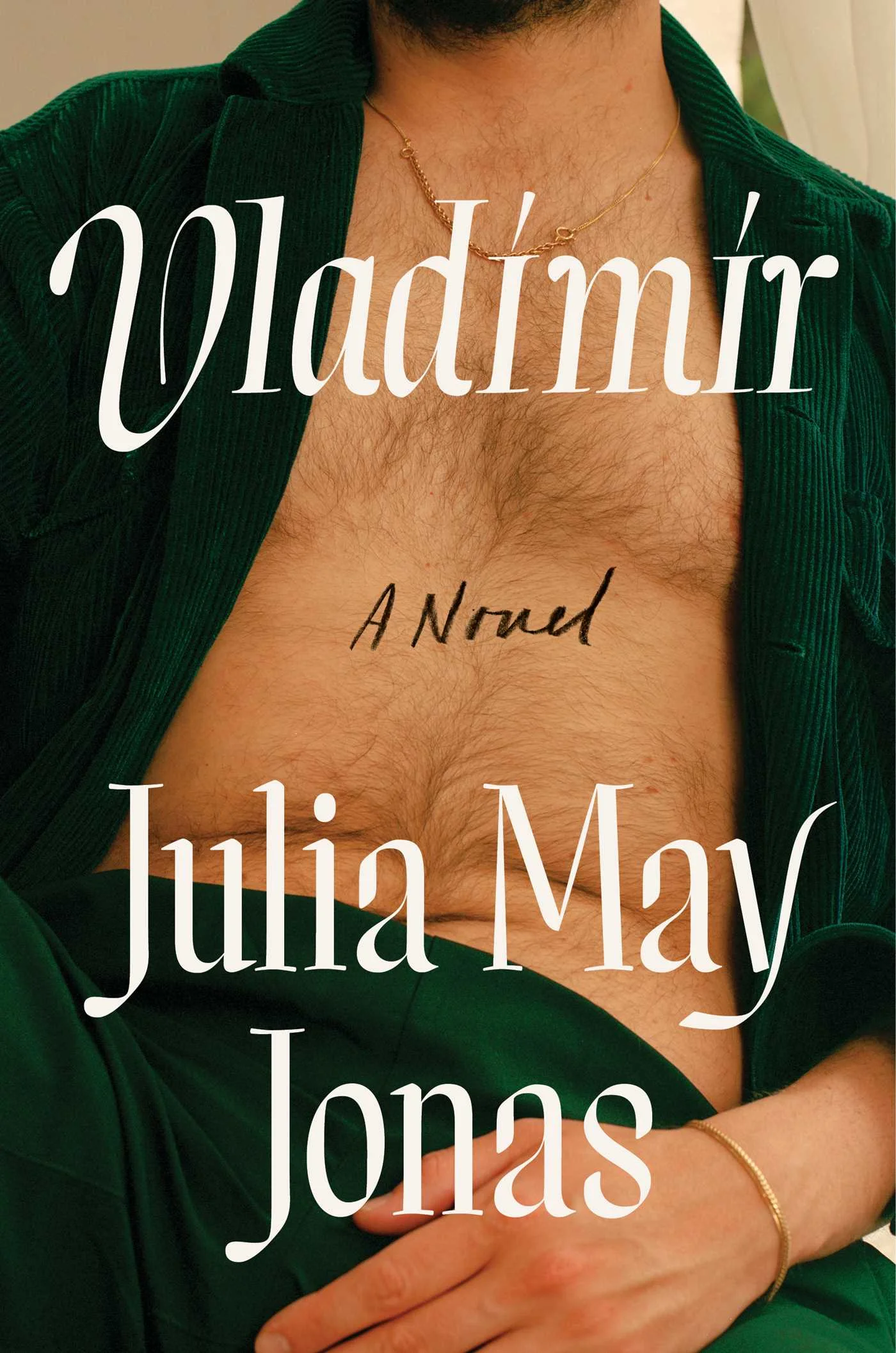
Julia May Jonas's Vladimir: Exploring M's Changed Perspective in the Netflix Adaptation
Since its explosive debut in February 2022, Julia May Jonas's Vladimir has captivated readers, quickly becoming a sensation on platforms like BookTok. This critically acclaimed novel, which surprisingly began its life as a 70-page play before evolving into a literary hit, delves into themes of age, power, desire, and academia with a sharp, provocative edge. Its massive popularity paved the way for a highly anticipated Netflix adaptation, greenlit in March 2025 with Rachel Weisz set to star. While faithful adaptations often walk a tightrope between honoring the source material and making necessary changes for the screen, the good news for fans of the Vladimir book is that Jonas herself is deeply involved, writing four of the eight episodes. This ensures that despite significant alterations, the core integrity of the story, particularly the nuanced journey of its protagonist M, remains intact.
It's important to note that when discussing the Vladimir book and its adaptation, we are referring to Julia May Jonas's provocative debut novel. This is distinct from other popular series sharing a similar name, such as The Chronicles of Vladimir Tod by Heather Brewer, which centers on a half-vampire orphan navigating junior high. While both offer compelling narratives, our focus here is squarely on the academic satire and psychological drama presented in Jonas's work and how its Netflix iteration reshapes M's character arc.
The Evolution of M's World: From the Page to the Screen
One of the most compelling aspects of adapting a beloved novel like the Vladimir book is observing how a character's internal landscape translates into a visual medium. For M, a professor grappling with her husband John's alleged misconduct and her own escalating obsession with a younger colleague, Vladimir, these changes are particularly profound. The Netflix series doesn't just expand the plot; it subtly reconfigures M's entire world, influencing how viewers perceive her motivations, moral struggles, and desires.
The transition from a character whose internal monologue dominates the narrative to one whose experiences are conveyed through dialogue and action inevitably brings shifts. Jonas's active participation in the series means these changes are intentional, designed to enrich the story and characters for a new audience. The series offers a fresh lens through which to explore M's complexities, adding layers that might have been less explicit in the literary format. For a deeper dive into specific alterations, you can read more about the Netflix Vladimir vs. Book: Key Character & Plot Differences Revealed.
Unpacking M's Obsession: A Deeper Dive into Her Relationship with Vladimir
Perhaps the most striking departure in the Netflix adaptation of the Vladimir book concerns the titular character himself and, by extension, M's intense fixation on him. In Jonas's novel, Vladimir's presence is surprisingly minimal, appearing in roughly 15% of the book. Most of their interactions are professional and group-oriented, with the notable exception of a pool day. Crucially, in the book, Vladimir never flirts with M, making the intensity of her obsession feel almost entirely self-generated, a projection of her desires and anxieties onto a relatively blank canvas.
The series, however, paints a different picture. Netflix's Vladimir is given more screen time and develops a genuine friendship with M. He is portrayed as charming, friendly, and even occasionally flirty. This fundamental change makes M's burgeoning obsession far more understandable and grounded in shared experiences. Her fantasies, now fueled by more tangible interactions and a reciprocal warmth from Vladimir, feel less like a descent into pure delusion and more like an escalation of a developing, albeit complex, connection. This shift humanizes M's desire, grounding it in a more believable dynamic, which can make her character more relatable to viewers while still exploring the unsettling nature of her fixation.
For readers of the Vladimir book, M's book-bound obsession was a stark, sometimes uncomfortable, portrayal of unchecked desire and psychological projection. The Netflix series, by altering Vladimir's character and his interactions with M, offers a slightly softer, yet equally compelling, narrative where the lines between friendship, fantasy, and infatuation become deliciously blurred. This allows for a deeper exploration of how M's internal world responds to external stimuli, transforming her from a potentially isolated figure into one who, for a time, genuinely believes in a shared connection.
M's Shifting Morality: A Nuanced Look at John's Predatory Behavior
Another pivotal area where the Netflix series significantly reconfigures M's perspective lies in her stance on her husband John's problematic relationships with students. In the Vladimir book, M is unequivocally on John's side. She repeatedly dismisses the young women he slept with, denigrating them and asserting that they are "playing the victim." Even when confronted by Sid about enabling John, M remains steadfast in her defense, demonstrating a shocking lack of empathy or self-reflection regarding the power dynamics at play in such relationships. This portrayal in the book positions M as deeply complicit, perhaps reflecting a certain academic entitlement or a willful blindness to maintain her own comfortable reality.
The Netflix adaptation, however, introduces a crucial ambiguity to M's character. While she publicly defends John's relationships as consensual, her private reactions tell a different story. The series shows M lashing out at John on several occasions over his affairs with students. The source of her frustration is left somewhat open to interpretation: is she genuinely upset by the ethical breach and the vulnerability of the young people involved, or is her anger primarily directed at the personal fallout and how John's actions impact her own life and career? This ambiguity adds a layer of complexity to M's character, suggesting a nascent moral awakening that wasn't as evident in the book.
A particularly telling line in the series comes when M declares John is "no longer allowed in the f*cking tower" because he "took little girls in the tower." This powerful statement strongly implies a growing understanding on M's part that while these women might have been legally adults, they were still young and vulnerable within the power structure of the academic institution. This nuanced shift moves M from outright complicity to a more conflicted position, hinting at a potential for growth and ethical reflection that enriches her character arc for the screen. This change reflects contemporary societal conversations around consent and power imbalances, making the series more resonant with current audiences and showcasing M's capacity for evolving insight.
Subtle Shifts, Profound Effects: Other Characterizations and Their Influence on M
Beyond the central dynamic between M and Vladimir, and her evolving stance on John, the Netflix adaptation of the Vladimir book makes other subtle yet impactful changes to character portrayals that subtly influence M's perspective. One such adjustment concerns Vladimir's repeated mentions of his wife Cynthia's suicide attempt.
In the novel, this detail is a constant, almost manipulative, talking point for Vladimir. He brings it up virtually every chance he gets – during his interview, with colleagues, and repeatedly with M. This makes his character feel rather detestable and paints his charm as potentially predatory, highlighting M's desperate attraction to a man with significant emotional baggage. By toning down Vladimir's constant references to his wife's suicide in the Netflix series, his character becomes less overtly problematic. While the information is still present, its reduced frequency allows for a more nuanced portrayal of Vladimir. This change contributes to making his developing friendship with M feel more organic and less tainted by obvious red flags. It also makes M's attraction to him seem less like a product of pure delusion and more like a response to a genuinely charismatic, albeit complex, individual.
Such adjustments in character details are a common and often effective strategy in book-to-screen adaptations. They can serve to streamline narratives, broaden character appeal, or simply make certain dynamics more legible for a visual medium. For M, a Vladimir who is less overtly manipulative might lead her down a path where her obsession feels more justified, at least initially, by a perceived genuine connection rather than solely her own psychological projections. It subtly alters the landscape of M's internal struggle, providing a different, yet equally compelling, exploration of desire and perception.
Again, to reiterate for clarity, this article focuses exclusively on Julia May Jonas's Vladimir book and its Netflix adaptation. Readers interested in other narratives featuring characters named Vladimir, such as the adventures of a young, half-vampire protagonist, can explore titles like Vladimir Tod: Surviving Junior High as a Half-Vampire Orphan.
Conclusion
The Netflix adaptation of Julia May Jonas's Vladimir book promises to bring new dimensions to a story already rich with complexity. By expanding Vladimir's role, softening some of his more detestable traits, and most importantly, introducing ambiguity into M's moral compass regarding John's actions, the series offers a fresh and deeply engaging exploration of its protagonist. These deliberate changes, carefully overseen by Julia May Jonas herself, transform M's journey from an almost solely internal, often unsettling, psychological descent into a more nuanced character arc. Her obsession becomes more understandable, and her potential for moral awakening, however conflicted, is foregrounded. Ultimately, the Netflix series is poised to provide a compelling companion to the beloved Vladimir book, enriching M's perspective and offering viewers a more multifaceted engagement with her provocative and unforgettable story.